Church of Saint Germain l’Auxerrois
2 Place du Louvre, 75001 Paris
Website – tel : 01 42 60 13 96
Open from Tuesday to Sunday: 10 a.m. to 7 p.m.
The first Church of Saint-Germain l’Auxerrois was destroyed during the great siege of Paris by the Normans in 885 and 886. Rebuilt in the 11th century and later restyled, it was finally completed in 1580.
The exterior
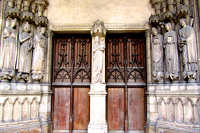
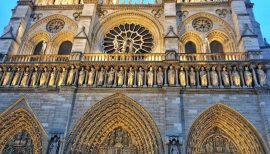
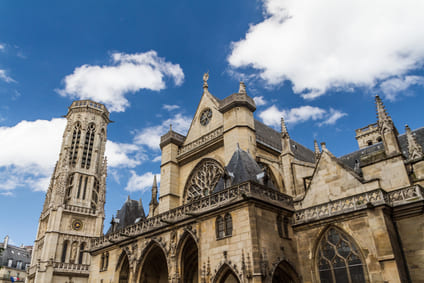
The façade of the church is decorated with statues, restored or replaced in the 19th century. In the center sits the Virgin and Child. To their left are Solomon, the Queen of Saba and Saint Vincent. To the right, Saint Germain, Saint Genevieve (the patron saint of the city) and an angel. The center of the façade is illuminated by a rose, and the truss is topped by a statue of the Archangel Michael. The church’s tower dates back to the 12th century.
The interior

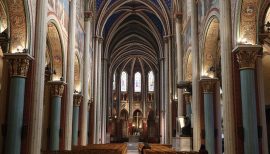
Though rebuilt many times, the church has a large number of remarkable works of art and furniture dating back to the period between the 13th and 17th centuries.
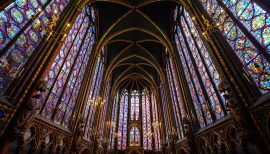
Part of the stained glass dates back to the 16th century, and is found in both arms of the transept. To the north are illustrated scenes from the life of Christ. On the other side are scenes depicting the Incredulity of Saint Thomas and the Assumption of the Virgin. The statuary is particularly noticeable in the Chapel of the Virgin. One is Saint Germain, bishop of Auxerre (13th century), another, Saint Mary of Egypt (16th century). Above the altar stands a Madonna and Child from the 14th century and over the door of the tower, the Virgin called the Bird of the 15th century. At the entrance of the choir, two statues represent the patron saints of the building: Saint Germain and Saint Vincent (15th century). Two altarpieces dating from the 16th century are devoted to one of the episodes of the life of the Virgin, and the other to the Passion. In the 19th century the wall and the windows of the choir and the chapel paintings were added.
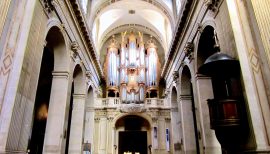
Regarding the furniture, of note in particular are the pulpit, the pew (17th century), and the organ from the Sainte-Chapelle (Holy Chapel)