Day 1: From the Avenue of Dreams to the Iron Lady

Today is designed to take your breath away with the sheer scale of the “City of Light.” You will walk the world’s most famous avenue, witness the triumph of Napoleon, and finish with a cinematic sunset at the Eiffel Tower. It is a day of monumental beauty and legendary vistas.
Welcome to Paris! Once you’ve cleared customs and collected your luggage, you have two main options to reach the city center: follow the signs for “Taxi” (official ranks outside the terminals) or “Paris par le train” (for the RER station).
For the most comfortable arrival after a long night flight, we strongly recommend taking a G7 Taxi from the official ranks (approx. €65 flat rate). While the train is efficient, the transfer at Châtelet involves many stairs and long corridors. A taxi will drop you right at the door of Hôtel Napoléon in about 45 minutes, allowing you to start your trip stress-free.
If you choose the RER B train:
-
Tickets: Buy a “Billet Île-de-France” to Paris-CDG (approx. €14) at the green kiosks.
-
The Journey: Board the RER B heading south (Saint-Rémy-lès-Chevreuse or Robinson).
-
The Transfer: Get off at Châtelet-Les Halles and transfer to Metro Line 1 towards “La Défense”.
Located just steps from the Arc de Triomphe, Hôtel Napoléon (40 Avenue de Friedland) is your home in Paris. Drop your luggage at this historic 5-star palace, once a gift from a Russian businessman to his French bride.
Since you’ve traveled all night, don’t rush back outside immediately. Head straight to Le Bivouac, the hotel’s cozy on-site lounge located just off the lobby. It’s the perfect, quiet spot to have your first Parisian breakfast and plan your afternoon while the staff takes care of your bags.
1. Champs-Élysées (learn more) ➜
Step out of the hotel and turn onto the world’s most glamorous avenue. Since you are already at the top of the hill, enjoy a leisurely walk down the Champs-Élysées toward Franklin D. Roosevelt. Admire the luxury flagships and the manicured chestnut trees that define Parisian elegance.
2. Arc de Triomphe (Full Guide & Tickets) ➜
A colossal monument commissioned by Napoleon to honor French victories, offering a legendary view of the twelve avenues radiating from its base.
Tip 1: Take the stairs to the rooftop for the best view of the “star” street layout.
Tip 2: Use the underground tunnel to reach the base; never try to cross the traffic circle above ground.
After visiting the Arc de Triomphe, it’s time for a well-deserved break. To keep your journey fluid, I have selected a charming brasserie located right at the start of your walk toward the Eiffel Tower.
Now that you’ve refueled, it’s time for the “Grand Reveal.” You have two easy ways to reach the Trocadéro terrace from the Arc de Triomphe:
3. Avenue Kléber
- Option 1: The Scenic Stroll (20-25 min walk)
Walk down Avenue Kléber. This is one of the most prestigious avenues of the “Golden Triangle.” It is a straight, flat, and easy walk lined with stunning Haussmannian buildings and luxury hotels like The Peninsula. It’s the best way to soak in the quiet elegance of the 16th Arrondissement.
➜ Get Walking Directions
3 bis. Alternative from Arc de Triomphe
- Option 2: The Iconic Metro (10 min)
If you’d rather save your energy for the Eiffel Tower, take Metro Line 6 (Green line) at “Charles de Gaulle-Étoile” station.
Direction: Nation.
Stop: Trocadéro (only 3 stops away).
Why choose this? Line 6 is mostly elevated, offering brief but beautiful glimpses of the city’s rooftops.
➜ Open Metro Route on Maps
If you choose the metro, follow the signs for “Sortie 1 – Palais de Chaillot” at the Trocadéro station. As you exit the stairs and turn around, the Eiffel Tower will appear suddenly, perfectly framed by the wings of the Trocadéro palace. It’s one of the most cinematic arrivals in Paris!
4. Place du Trocadéro (learn more) ➜
Welcome to the best balcony in the world. As you reach the Place du Trocadéro, the Eiffel Tower reveals itself in all its glory across the river. Take a moment to enjoy the panoramic view and capture that iconic Paris photo.
When you’re ready, walk down through the Trocadéro Gardens, past the fountains, and cross the Pont d’Iéna bridge to reach the foot of the Eiffel Tower.
➜ Directions to the Cruise Dock
To avoid the massive crowds on the main upper platform, head to the side stairs leading down into the gardens. The view is just as spectacular, but the atmosphere is much more serene, and the fountains offer a beautiful foreground for your pictures.
5. Cruise
Departure from Port de la Bourdonnais, right at the foot of the Tower
There is no better way to see Paris for the first time than from the water. Board a glass-topped boat for a 1-hour sightseeing cruise. You’ll glide past the Louvre, Notre-Dame, and under the city’s historic bridges while resting your legs after your flight.
Snag a seat on the top deck’s right side for the best view of the monuments.
Built for the 1889 World’s Fair, the Eiffel Tower was once the tallest structure in the world and remains the undisputed symbol of Paris. Standing at 330 meters, its intricate iron lattice is a masterpiece of engineering. Take a moment to walk around the base and look up—the scale is truly breathtaking as the golden hour light begins to hit the metal.
Your reservation at Madame Brasserie includes a lift ticket to the first floor. To avoid any stress, look for the dedicated restaurant queue at the security entrance (near the North pillar). Present your booking confirmation to the staff to bypass the standard tourist lines.
6. Eiffel Tower (Full Guide & Tickets) ➜
After dinner, the adventure continues upward. Take the elevator to the very top (the Summit) to see the “City of Light” come alive. From here, the street patterns of Paris look like a glowing map.
The Sparkle: Every hour on the hour, 20,000 lightbulbs flash for five minutes, making the tower dance with light. Being on the tower during the sparkle is a truly surreal experience.
Your first day in the City of Light comes to an end. It’s time to head back to the comfort of your room at Hôtel Napoléon. You have two main ways to return from the Eiffel Tower:
-
By Taxi or Ride-share (Recommended): The most seamless way to end your night. A 10-minute drive will take you directly from the tower’s base to the hotel entrance.
➜ Get Directions back to the Hotel
-
By Metro (Line 6): Walk to the “Bir-Hakeim” station and take Line 6 (Green) towards “Charles de Gaulle-Étoile”. It’s a direct 10-minute ride to your final stop.
➜ Get direction from Eiffel Tower to Bir-Hakeim Station by foot
If you’re tired, don’t hunt for a taxi on the street. Book a G7 Taxi or Uber to call a car directly to a specific meeting point near the tower (like the corner of Avenue de la Bourdonnais). It’s safer, faster, and ensures a fixed price to get you tucked into bed in no time.
Arrival at Charles de Gaulle Airport
Welcome to Paris! Once you’ve cleared customs and collected your luggage, you have two main options to reach the city center: follow the signs for “Taxi” (official ranks outside the terminals) or “Paris par le train” (for the RER station).
For the most comfortable arrival after a long flight, I strongly recommend taking a G7 Taxi from the official ranks (approx. €65 flat rate). While the train is efficient, the transfer at Châtelet involves many stairs and long corridors. A taxi will drop you right at the door of your hotel in about 30-45 minutes, allowing you to start your trip stress-free.
Day 1: From the Avenue of Dreams to the Iron Lady

Today is designed to take your breath away with the sheer scale of the “City of Light.” You will walk the world’s most famous avenue, witness the triumph of Napoleon, and finish with a cinematic sunset at the Eiffel Tower. It is a day of monumental beauty and legendary vistas.
Champs-Elysées District (8th)
Welcome to the Paris of power and glamour. From the monumental Arc de Triomphe to the Élysée Palace, this district is the heartbeat of French elegance. A 19th-century masterpiece of Haussmannian architecture, it’s a world of haute couture, Michelin-starred dining, and legendary landmarks like the Champs-Élysées.
1. Champs-Élysées (Full Guide) ➜
The world’s most glamorous avenue, a wide boulevard lined with luxury boutiques, historic theaters, and manicured chestnut trees.
As you walk up towards the Arc, stop at No. 68. This is the historic Guerlain house. Even if you aren’t shopping for perfume, step inside to admire the breathtaking Carrara marble staircase and gold-leaf walls. It’s a 1914 masterpiece hidden in plain sight!
At No. 74, don’t just pass by the arcade. Step into the Hôtel Claridge Gallery. Look up at the stunning 1913 glass ceiling and the ornate neo-classical details. It’s a peaceful, opulent bubble that feels like a time machine back to the “Années Folles” (the Roaring Twenties), away from the avenue’s hustle.
2. Arc de Triomphe (Full Guide & Tickets) ➜
A colossal monument commissioned by Napoleon to honor French victories, offering a legendary view of the twelve avenues radiating from its base.
Tip 1: Take the stairs to the rooftop for the best view of the “star” street layout.
Tip 2: Use the underground tunnel to reach the base; never try to cross the traffic circle above ground.
Now, it’s time for the “Grand Reveal.” You have two easy ways to reach the Trocadéro terrace from the Arc de Triomphe:
3. Avenue Kléber
- Option 1: The Scenic Stroll (30 min walk)
Walk down Avenue Kléber. This is one of the most prestigious avenues of the “Golden Triangle.” It is a straight, flat, and easy walk lined with stunning Haussmannian buildings and luxury hotels like The Peninsula. It’s the best way to soak in the quiet elegance of the 16th Arrondissement.
➜ Get Walking Directions
As you walk down this elegant avenue, keep an eye out for these three unique details:
- The Lion Gate (No. 17): Stop to admire the monumental door and the stone-carved lion heads—a perfect example of 19th-century opulence.
- The Diplomatic Icon (No. 19): The Peninsula Hotel. This is where the Paris Peace Accords were signed in 1973. Look at the glass entrance; it’s a marvel of modern design.
- The “Secret” Frame: At the corner of Rue Boissière, look back. The Arc de Triomphe is perfectly framed by trees here, offering a quiet, postcard-perfect photo away from the crowds.
3 bis. Alternative from Arc de Triomphe
- Option 2: The Iconic Metro (10 min)
If you’d rather save your energy for the Eiffel Tower, take Metro Line 6 (Green line) at “Charles de Gaulle-Étoile” station.
Direction: Nation.
Stop: Trocadéro (only 3 stops away).
Why choose this? Line 6 is mostly elevated, offering brief but beautiful glimpses of the city’s rooftops.
➜ Open Metro Route on Maps
If you choose the metro, follow the signs for “Sortie 1 – Palais de Chaillot” at the Trocadéro station. As you exit the stairs and turn around, the Eiffel Tower will appear suddenly, perfectly framed by the wings of the Trocadéro palace. It’s one of the most cinematic arrivals in Paris!
Trocadéro District (16th)

Welcome to the most prestigious residential district in Paris. Known for its quiet, tree-lined avenues and grand Haussmannian mansions, the 16th is the epitome of bourgeois charm. Its crown jewel, Trocadéro, offers the city’s most spectacular balcony overlooking the Seine and the Eiffel Tower, a perfect blend of world-class museums, manicured gardens, and architectural grandeur.
4. Place du Trocadéro (Full Guide) ➜
Welcome to the best balcony in the world. As you reach the Place du Trocadéro, the Eiffel Tower reveals itself in all its glory across the river. Take a moment to enjoy the panoramic view and capture that iconic Paris photo. After your lunch, walk down through the Trocadéro Gardens.
- Musée de l’Homme: Anthropology and evolution (with a great café view).
- Cité de l’Architecture: Spectacular replicas of French monuments.
- Musée de la Marine: Immersive naval history.
- Aquarium de Paris: Perfect underwater break for families.
👉 Tap the icons on your interactive map to read my full guides and book tickets.
To avoid the massive crowds on the main upper platform, head to the side stairs leading down into the gardens. The view is just as spectacular, but the atmosphere is much more serene, and the fountains offer a beautiful foreground for your pictures.
While everyone stays on the upper terrace, use the side stairs to find these hidden perspectives:
- The Gilded Statues: Pause halfway down. The giant gold-leaf statues (like The Apollo) offer a magnificent frame for the Eiffel Tower. Stand slightly behind them for a “Gold & Iron” photo contrast.
- The “L’Homme” Sculpture: Near the bottom, look for the monumental bronze statues by the pools. They offer a powerful, lower-angle view where the Eiffel Tower seems to rise directly from the water of the fountains.
When you’re ready, past the fountains, and cross the Pont d’Iéna bridge to reach the foot of the Eiffel Tower.
➜ Directions to the Cruise Dock
Eiffel Tower District (7th)

Welcome to the prestigious Left Bank, a district defined by its monumental scale and aristocratic soul. Home to the Eiffel Tower, the sprawling Champ de Mars, and the golden dome of Les Invalides, the 7th is where Paris feels its most majestic. Beyond the landmarks, you’ll find narrow, elegant streets lined with gourmet boutiques and some of the city’s most celebrated restaurants. It is a district that perfectly balances grand history with a quiet, upscale Parisian lifestyle.
6. Cruise (Availability & Booking) ➜
Departure from Port de la Bourdonnais, right at the foot of the Tower (Walk 10 mins from Trocadéro gardens).
There is no better way to see Paris for the first time than from the water. Board a glass-topped boat for a 1-hour sightseeing cruise. You’ll glide past the Louvre, Notre-Dame, and under the city’s historic bridges while resting your feet and watch the city drift by.
Snag a seat on the top deck’s right side for the best view of the monuments.
While you enjoy the breeze, keep your eyes peeled for these two unique river sights:
- The “Zouave” Statue: As you pass under the Pont de l’Alma, look at the stone soldier on the bridge pillar. Historically, Parisians use him to measure floods. If his feet are underwater, the Seine is rising; if his knees are wet, it’s a major flood!
- The “Love Lock” Echo: When passing under the Pont Neuf (the oldest bridge in Paris), look at the “mascarons”, the 381 different stone faces carved into the bridge. Each one has a unique, often funny or grotesque expression.
7. Eiffel Tower (Full Guide & Tickets) ➜
Take the elevator to the very top (the Summit) to see the “City of Light” come alive. From here, the street patterns of Paris look like a glowing map.
Built for the 1889 World’s Fair, the Eiffel Tower was once the tallest structure in the world and remains the undisputed symbol of Paris. Standing at 330 meters, its intricate iron lattice is a masterpiece of engineering. Take a moment to walk around the base and look up, the scale is truly breathtaking as the golden hour light begins to hit the metal.
Tip 1: Book your summit tickets exactly 60 days in advance – they vanish in days.
Tip 2: Even if you don’t go up, walk through the Champ de Mars gardens behind the tower for a local picnic vibe.
Before heading to dinner, don’t miss these unique perspectives around the Iron Lady:
- The “Instagram” Cul-de-Sac: Walk to the end of Rue de l’Université. The cobblestones and buildings offer the most cinematic frame of the Tower.
- The Ghost Chimney: Behind the West pillar, hidden in the trees, stands a red-brick chimney from 1887. It once powered the Tower’s elevators!
- The Long View: Walk 200m down the Champ de Mars toward École Militaire. It’s the best spot to capture the Tower’s full height.
Your first day in the City of Light comes to an end. It’s time to head back to the comfort of your room at your hotel. You have two main ways to return from the Eiffel Tower:
-
By Taxi (Recommended): The most seamless way to end your night. If you’re tired, don’t hunt for a taxi on the street. Book a G7 Taxi or Uber to call a car directly to a specific meeting point near the tower. It’s safer, faster, and ensures a fixed price to get you tucked into bed in no time.
-
By Metro
Day 2: Golden Palaces & Belle Époque Glamour
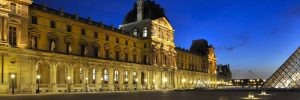
Step into the shoes of French royalty. This day flows from the world’s greatest art collection through manicured gardens to the gilded opulence of the Opera. It’s a journey through the elegance and artistic soul that made Paris the cultural capital of the world.
Louvre District (1st)
Welcome to the birthplace of Paris. Once the seat of French kings, the 1st arrondissement is a monumental blend of history, power, and art. From the fortress-turned-palace of the Louvre to the majestic Tuileries Garden, every cobblestone here whispers stories of royalty. It is a district of timeless elegance, where you’ll find grand squares like Place Vendôme, hidden gems like the Palais-Royal, and the city’s oldest soul. To walk these streets is to walk through the very history of France.
1. Louvre Museum (Full Article & Tickets) ➜
Once a royal palace, this is now the world’s largest and most visited art museum, housing thousands of years of human history.
Tip 1: Enter through the “Carrousel du Louvre” mall at 99 Rue de Rivoli to bypass the massive pyramid line.
Tip 2: Focus on the “Denon Wing” to see the “Big Three” (Mona Lisa, Winged Victory, Venus de Milo) efficiently.
The area around the Louvre is packed with secrets. Here are the must-see details:
- The Buren Columns (Palais Royal): Don’t just look at the 260 black-and-white columns; notice how they are actually a contemporary installation titled “Les Deux Plateaux,” designed to reveal the underground level of the courtyard.
- Saint-Germain-l’Auxerrois: Known as the “Church of the Kings.” Look at the bell tower, it’s famous for ringing the signal that started the Saint Bartholomew’s Day massacre in 1572.
- The Facade Symbols: On the Louvre’s exterior (Cour Carrée), look for the monograms. You’ll see “H” for Henri II, “K” for Catherine de Médicis, and Napoleon’s iconic bees hidden in the stone carvings.
- Pont Royal: This is the third oldest bridge in Paris. Look at its sober classical design, it was entirely financed by Louis XIV himself, which is why it bears the “Royal” name.
2. Tuileries Garden (Full Article) ➜
(Walk: 5 mins from Le Louvre)
A perfectly symmetrical public garden that once served as the private playground for the kings and queens of France.
4. Place Vendôme (Full Article) ➜
(Walk: 10 mins from Angelina via Rue de la Paix)
A stunning octagonal square with its central column that represents the height of Parisian luxury, surrounded by the world’s most prestigious jewelry houses.
Tip: At Vendôme, check out the Ritz Paris facade for a glimpse of ultimate luxury.
- The Universal Meter (36 Place Vendôme): Look for a small marble shelf embedded in the wall. It’s a “mètre étalon” from 1795, placed there to teach Parisians the new metric system. There are only two left in the city!
- The Ritz’s Secret Passage: The hotel at Place Vendôme is legendary, but look at the facade at No. 15. This is where Coco Chanel lived for 34 years. She loved it so much she called it “my home.”
- Perspective Rue de la Paix: Standing at the center of Place Vendôme, look toward the Opéra. The street was designed to frame the Opéra Garnier perfectly, creating one of the most expensive views in the world.
5. Opéra Garnier (Full Article & Tickets) ➜
(Walk: 10 mins from Place Vendôme)
It is arguably the most beautiful building in Paris, an architectural marvel of marble, gold leaf, and velvet. This theater inspired the setting for “The Phantom of the Opera.”
Tip 1: If you can, book a self-guided tour later in the afternoon when the morning crowds have thinned (last entrance at 3:30 PM).
Tip 2: Look up in the grand hall to see the colorful ceiling painted by Marc Chagall in 1964.
- The Hidden Beehives: Look up at the roof of the Opéra Garnier. There are real beehives up there! The honey produced is sold in the Opera’s gift shop and is a rare Parisian souvenir.
- Le Square de l’Opéra-Louis Jouvet: Just behind the Opera (via Rue Boudreau), discover this pedestrian oasis. It’s home to the Théâtre de l’Athénée and a beautiful statue called “Le Poète chevauchant Pégase.” It’s the quietest spot in this frantic district. Get Direction ➜
- The Fragonard Museum (9 Rue Scribe): Hidden in a stunning Napoleon III townhouse, this museum is free. Even if you don’t do the tour, the courtyard and the 19th-century architecture are breathtaking. A true “scented” sanctuary. Get Direction ➜
6. The Madeleine Church (Full Article) ➜
(Walk: 10 mins from Opéra Garnier)
Originally envisioned by Napoleon as a temple to the glory of his Great Army, this majestic neoclassical landmark resembles an ancient Greek temple and stands as one of Paris’s most imposing architectural treasures.
Pause at the flower market on the side of the church. It has been there since 1834, offering a touch of color to the stone architecture.
- The “Village” of Cité Berryer: Between Rue Royale and Rue Boissy d’Anglas, slip into this tiny open-air passage (also called Le Village Royal). It often features giant art installations (like the famous colorful umbrellas) and feels like a luxury village tucked away from the city noise. Get Direction ➜
- Maxim’s Legend (No. 3 Rue Royale): You’ll pass the world’s most famous Art Nouveau restaurant. Look at its mahogany facade. It was the center of Parisian nightlife during the “Belle Époque” and remains a symbol of French chic.
7. Place de la Concorde (Full Article) ➜
(Walk: 10 mins from the Madeleine Church)
A massive historic square where the French Revolution unfolded, now home to a 3,000-year-old Egyptian obelisk and two magnificent fountains.
If you have some time before your dinner reservation, these spots offer the perfect final touch to your day:
- Musée de l’Orangerie: Located at the edge of the Tuileries, this museum is the sanctuary of Monet’s giant Water Lilies.
- Pont de la Concorde: A bridge built with stones from the demolished Bastille prison, you are literally walking on French Revolution history.
- Palais Bourbon: Look across the river to see the grand colonnade of the French National Assembly, designed to perfectly mirror the Madeleine church behind you.
👉 Tap the icons on your interactive map to read my full guides and book tickets.
Your second day in Paris concludes in the elegance of Place de la Concorde. To return comfortably to your hotel after your meal at Le Florentin, you have two excellent options:
- By Taxi (Highly Recommended): Since you are at the Hôtel de Crillon, you can simply ask the hotel doorman to hail a taxi for you at the entrance. It is the most seamless and stylish way to end your evening. Alternatively, use your G7 or Uber app for a pickup right at the Place de la Concorde.
- By Metro: The Concorde station is just steps away. It serves Lines 1, 8, and 12, making it very easy to reach most parts of the city directly.
After a long day of walking through the Louvre and the Tuileries, I recommend the taxi to save your legs for tomorrow’s adventures!
Day 3: Island Origins & Artistic Heights
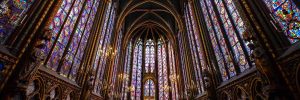
Explore the two extremes of Paris: the birthplace of the city on the islands and the bohemian village on the hill. You’ll experience the spiritual power of Gothic architecture before catching the sunset in the neighborhood of Van Gogh and Picasso.
Ile de la Cité
This is where it all began. Floating in the middle of the Seine, the Île de la Cité is the historic and sacred heart of the capital. From the Gothic majesty of Notre-Dame Cathedral to the dazzling stained glass of Sainte-Chapelle, the island is a living masterpiece of medieval architecture. Beyond the royal palaces and the somber history of the Conciergerie, you’ll find a surprisingly serene atmosphere. Wander through its quiet quays, explore its vibrant flower market, and discover hidden squares that feel worlds away from the city’s bustle.
17. Notre-Dame de Paris (Full Article & Tickets) ➜
The Gothic heart of the city, this cathedral is a masterpiece of medieval architecture, famous for its flying buttresses and centuries of French history.
Tip 1: Arrive early to avoid the crowds and to photograph the facade without the mid-day crowds.
Tip 2: Walk to the “Point Zéro” in the square in front of the cathedral – the official center of Paris and kilometer zero of France.
18. Sainte Chapelle (Full Article & Tickets) ➜
(Walk: 5 mins from Notre-Dame)
A 13th-century royal chapel hidden within the Palace of Justice, celebrated for its walls of stained glass that depict over a thousand biblical scenes.
Tip 1: Visit on a bright morning to see the 1,113 stained-glass scenes illuminate the room.
Tip 2: Download the “Sainte-Chapelle Windows” app to identify the stories told in the glass.
If you have managed to beat the crowds at the Cathedral and want to linger a little longer on the island:
- The Conciergerie: A former royal palace that became a revolutionary prison. It is most famous for being the place where Marie-Antoinette spent her final days. The medieval Gothic halls are breathtakingly vast.
- Place Dauphine: Hidden behind the Law Courts at the tip of the island, this quiet, triangular square is a favorite for locals. It’s the perfect spot to grab a coffee and watch people play pétanque under the trees.
- Pont Neuf & Square du Vert-Galant: Don’t let the name fool you, Pont Neuf is the oldest bridge in Paris. Walk down the stairs at the center of the bridge to reach the “tip” of the island (Square du Vert-Galant) for a romantic view of the Louvre from the water level.
👉 Tap the icons on your interactive map for more stories and booking links.
Île Saint-Louis
A charming, upscale residential island that feels like a quiet 17th-century village tucked away in the middle of the Seine.
20. Church of Saint-Louis en l’Ile (Full Article) ➜
Nestled in the center of the island, this parish church is a masterpiece of the 17th and 18th centuries. Completed in 1726 after sixty years of construction, it is dedicated to Saint Louis and stands as a testament to the island’s royal heritage. Inside, you’ll find a sanctuary of light and gold, housing precious artworks and a stunning great organ.
Don’t forget to look up as you walk down the main street! The Saint-Louis-en-l’Île clock hangs unusually over the sidewalk like a shop sign. This wrought-iron beauty is a rare Parisian survivor and the ultimate spot for a photo that feels like 18th-century Paris.
- Berthillon (31 Rue Saint-Louis en l’Île): The legendary Parisian ice cream. **Pro tip:** if the line at the historic shop is too long, many smaller cafes on the island carry the exact same flavors—just look for the “Berthillon” sign!
- Hôtel de Lauzun & Hôtel Lambert: As you walk along Quai d’Anjou, admire the massive doors of these 17th-century mansions. This is where poet Charles Baudelaire lived and wrote part of his famous Les Fleurs du Mal.
- The Secret Courtyard (No. 11 Quai d’Anjou): If you’re lucky enough to find the main carriage gate slightly ajar, take a quick peek. It is one of the island’s most beautiful examples of classical architecture.
21. Marie Bridge (Full Article) ➜
Built between 1614 and 1635, the Pont Marie is one of the oldest bridges in Paris. It was named after Christophe Marie, the engineer who urbanized the Île Saint-Louis. While it now offers a peaceful crossing with five unique arches, its history is marked by a 1658 disaster when a massive flood swept away twenty of the houses that once stood atop it, claiming 60 lives. Today, it has shed its tragic past to become known as the “Bridge of Lovers.”
Le Marais District (4th)
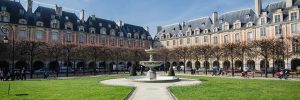
Step into one of Paris’s most charismatic districts. Originally a marshland (le marais), this area was transformed in the 17th century into the playground of the aristocracy, leaving behind a legacy of majestic mansions. From the perfect symmetry of Place des Vosges to its hidden medieval courtyards, the Marais is where old-world elegance meets the creative pulse of modern Paris.
- Hôtel de Sens (1 Rue du Figuier): Just after the bridge, look at this fairy-tale medieval castle. Look closer: There is a real cannonball still lodged in the stone facade from the “Three Glorious Days” revolution of 1830.
- The Half-Timbered Houses (11 & 13 Rue François Miron): These two buildings look like they belong in a medieval village, not a modern capital. They are among the oldest houses in Paris, dating back to the 14th or 15th century.
- Hôtel de Sully (62 Rue Saint-Antoine): Don’t just walk past the gate. Enter the courtyard of this magnificent Louis XIII mansion. Secret Passage: Walk through the garden at the back; a small, discreet door leads you directly into the corner of the Place des Vosges.
22. Place des Vosges (Full Article) ➜
Inaugurated in 1612, this is the oldest planned square in Paris. Commissioned by Henri IV, it is a marvel of symmetry with 36 identical red-brick and slate pavilions. Once the site of royal tournaments and aristocratic duels, it now offers a peaceful retreat where history meets the elegant “art de vivre” of the Marais.
- The Secret Shortcut (No. 7): Slip through the discreet door in the southwest corner to reach the stunning courtyard of Hôtel de Sully. It’s a magical, quiet escape from the crowds.
- Victor Hugo’s Home (No. 6): Visit the apartment where the author of Les Misérables lived for 16 years. His creative world is perfectly preserved here.
- The Sun King’s Shadow: Look at the equestrian statue in the center. It’s a 19th-century replacement of the original destroyed during the Revolution, symbolizing the square’s royal endurance.
The Marais is a labyrinth of treasures. If you have an hour or two to spare:
- Musée Carnavalet: The ultimate museum of the history of Paris, located in two magnificent mansions. It’s free to visit and its gardens are a peaceful sanctuary.
- Musée Picasso: Housed in the magnificent Hôtel Salé, it holds the world’s largest collection of Picasso’s works. Even if you don’t go inside, the building’s 17th-century architecture is legendary.
- Rue des Rosiers: The heart of the Jewish quarter. Join the line for a world-famous falafel at L’As du Fallafel or try the traditional pastries at Sacha Finkelsztajn. Get Direction ➜
- Le Marché des Enfants Rouges: The oldest covered market in Paris (1615). It’s a vibrant spot where locals eat lunch at stalls serving food from all over the world.
👉 Tap the icons on your interactive map for more stories and booking links.
Logistics: From Le Marais to Montmartre
The journey takes approximately 30 to 35 minutes door-to-door.
1. At Chemin Vert Station (Line 8 — Direction Balard)
- Where to stand: Board at the back of the train. This will put you right in front of the transfer corridor when you reach Madeleine.
- Travel time: About 10 minutes (6 stops).
2. The Transfer at Madeleine (Line 8 → Line 12)
- Follow the blue M12 signs toward Mairie d’Aubervilliers.
Where to stand on Line 12: Board at the front of the train. This is crucial because the elevators at Abbesses are located at the front end of the platform.
3. Arriving at Abbesses Station (Line 12)
- Travel time: About 10 minutes (7 stops).
- The Exit: Follow the only exit marked “Place des Abbesses.”
- Vital Advice: Abbesses is the deepest station in Paris (36 meters underground). When you step off the train, follow the signs for the elevators (lifts). Do not take the spiral stairs unless you want a 176-step workout!
Reaching the Funicular from Abbesses
Once you emerge onto the beautiful Place des Abbesses (take a moment to admire the Art Nouveau glass roof of the entrance), here is how to reach the funicular to save your legs:
-
Exit the station and walk straight onto Rue Yvonne Le Tac.
-
Turn left onto Rue d’Orsel.
-
Walk for about 3 minutes until you hit Place Saint-Pierre. The Funicular entrance will be on your left at the base of the hill.
Tickets: You don’t need a special ticket! A standard Metro Ticket T+ or your Navigo pass works here.
The Ride: It’s a 90-second journey that saves you from climbing 222 steep steps. It’s the most iconic way to reach the summit of the Butte Montmartre.
Montmartre Hill
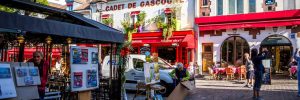
Perched 130 meters above the city, Montmartre is a timeless village that captures the bohemian spirit of the Belle Époque. Once a rustic hill covered in vineyards and windmills, it became the creative refuge for legends like Picasso, Renoir, and Toulouse-Lautrec. Today, its steep cobblestone streets, hidden artist studios, and legendary cabarets like Le Lapin Agile still pulse with the energy that made it the birthplace of modern art. It remains the ultimate vantage point for the most stunning panoramic views over the rooftops of Paris.
23. The Sacré-Coeur Basilica (Full Article) ➜
Perched at the highest point of the city, the Sacré-Cœur is more than just a monument; it is a symbol of resilience.
Built in a unique Romano-Byzantine style following the Franco-Prussian War, its dazzling white facade is made of “self-bleaching” stone that actually turns whiter when it rains.
Inside, you’ll find one of the world’s largest mosaics, while the air carries the spirit of a 24/7 prayer vigil that has continued uninterrupted since 1919.
- Climb the Dome: If you are in good shape, the 300-step climb is worth every effort. The reward is a 360-degree panoramic view that is arguably the best in Paris.
- The Secret Gardens: For a moment of peace, wander into the gardens surrounding the basilica. They are often much quieter than the bustling main square in front.
- The “Savoyarde”: Listen for the bells! The tower houses one of the largest and heaviest bells in Europe, weighing nearly 19 tons.
- The Hidden Garden: Instead of taking the main stairs down, walk around the side of the Basilica to Square Marcel Bleustein-Blanchet. This terraced garden offers a spectacular, close-up view of the white domes and is much more peaceful. Get Direction ➜
24. Place du Tertre (Full Article) ➜
At 7:00 PM, the square is at its most vibrant. Once the main square of the village of Montmartre, it has been the heart of the local art scene since the 19th century. Today, nearly 300 artists take turns in the square’s “Carré aux Artistes,” keeping the bohemian spirit alive. It is a lively open-air gallery where painters, portraitists, and caricaturists work side-by-side amidst historic café terraces.
- The Artist Tradition: Take a stroll through the central square. If you’d like a portrait or a 2-minute silhouette cutting, this is the place—but feel free to just wander and observe the brushes in action.
- The Old Town Hall: At No. 3, look for the former Mairie de Montmartre. It’s where the village’s administrative life happened before Montmartre officially became part of Paris in 1860.
- A Quick Aperitif: If you find a spot, enjoy a glass of wine at À la Mère Catherine (founded in 1793). Legend says the word “Bistro” was born here when Russian soldiers shouted “Bystro!” (quick!) to be served faster.
- Le Passe-Muraille (Place Marcel Aymé): Look for the bronze sculpture of a man literally emerging from a stone wall. It’s a tribute to the writer Marcel Aymé and his famous story about a man who could walk through walls.
- Le Moulin Radet: Just before the restaurant, you will see a large windmill perched on a corner. This is Moulin Radet. It’s often confused with the restaurant’s mill, but it serves as a perfect reminder of the 30+ windmills that once dotted this hill.
- The View from Rue Lepic: As you reach the intersection with Rue Girardon, look down the hill. You’ll see the steep, winding nature of Montmartre’s streets that inspired so many Impressionist painters.
If you want to escape the crowds of Place du Tertre and discover the true “hidden” village:
- Musée de Montmartre: Located in the oldest house on the hill, this museum was once the home and studio of artists like Renoir and Valadon. The Renoir Gardens offer a stunning view over the vineyards and are incredibly peaceful.
- Le Clos Montmartre (The Vineyards): Right across from the museum, you’ll find the last active vineyard in Paris. Planted in 1933 to save the land from developers, it still produces wine today. It is the most photographed and “countryside” spot in the city.
- Le Lapin Agile: Just downhill from the vineyards, this bright pink cottage is the oldest cabaret in Paris. It was the favorite haunt of Picasso and Modigliani.
👉 Tap icons on your interactive map for more stories and booking links.
As your third day in Paris comes to a close at Le Moulin de la Galette, you have two easy ways to return to your hotel:
- By Taxi or Uber (Recommended): This is the most comfortable option. Since Rue Lepic is a major street, it’s very easy for a car to pick you up directly in front of the restaurant. Use your G7 or Uber app for a seamless ride back to your door.
- By Metro (Line 12): Walk down the charming, winding Rue Lepic for about 8 minutes to reach the Abbesses station. Since you’ll be entering the station from the street level, you won’t have to climb the 176 steps!
Local Tip: The walk down Rue Lepic at night is beautiful. You’ll pass the café from the movie Amélie (Café des Deux Moulins) on your way to the metro.
Day 4: “Intellectual Left Bank” Immersion

On your last day, cross over to the Left Bank (Rive Gauche) to discover the intellectual heart and soul of Paris. This day is about the soft light of Impressionist paintings, the quiet beauty of the city’s favorite park, and the hallowed halls where France’s greatest minds rest.
Saint-Germain-des-Prés District (6th)

This elegant Left Bank district evolved around the city’s oldest church, the Abbey of Saint-Germain-des-Prés. In the 20th century, it became the global center for existentialism and creativity, where thinkers like Sartre and de Beauvoir debated at the now-legendary Café de Flore and Les Deux Magots. Today, it remains a sanctuary for culture, blending world-class art galleries, historic bookshops, and chic designer boutiques with a sophisticated, timeless charm.
(Walk: 5 mins to Musée d’Orsay)
26. Musée d’Orsay (Full Article & Tickets) ➜
Housed in a spectacular former train station, this museum holds the world’s most renowned collection of Impressionist and Post-Impressionist art.
Tip 1: Head straight to the 5th floor to see the masterpieces by Monet and Van Gogh before the rooms get crowded.
Tip 2: The museum is closed on Mondays, so plan your week accordingly!
- The Bouquinistes: This quay is home to some of the most iconic “green boxes.” Take a moment to browse the vintage prints and rare art books. Pro tip: This specific stretch is historically known for its prestigious antique dealers and collectors.
- Hôtel de Mailly-Nesle (No. 29): Notice this majestic facade. This is where the philosopher Voltaire spent the final months of his life in 1778. A commemorative plaque marks the spot where the famous writer lived, giving the quay its name.
- The Louvre Perspective: As you walk toward the Pont Royal, look across the river. You’ll have one of the most perfect views of the Pavillon de Flore (the southern wing of the Louvre). It is the ideal photo spot to capture the harmony between the Seine and the palace.
27. Royal Bridge
The particularity of the Pont Royal is in the blocks of stone with which it was built. Indeed, previous attempts of constructing a bridge on this location had all failed, so Louis XIV decided to build a stone bridge of exceptional size that could withstand flooding. It was completed in 1689.
28. National School of Fine Arts (Full Article) ➜
The heir to the royal academies of the 17th century, the Beaux-Arts de Paris is a living museum of art history. Set on the site of a former Augustinian convent, its campus is a breathtaking blend of architectural styles.
From the 17th-century chapel (the school’s oldest building) to the majestic glass-domed hall used for major exhibitions, the school remains one of the world’s most prestigious training grounds for painters, sculptors, and architects.
The Cour du Mûrier: I highly recommend stepping into the Cour du Mûrier; it is one of the most serene and secret cloisters in Paris, filled with copies of antique statues and architectural fragments that make you feel as though you’ve been transported to a hidden Italian courtyard in the heart of Saint-Germain.
- No. 5 – Napoleon’s Shadow: Look up at this magnificent private mansion. A young Napoleon Bonaparte lived here in 1795 before he became Emperor. The street actually owes much of its prestige to the influence he and his family brought to the neighborhood.
- World-Class Galleries: As you walk, you are in the heart of the “Carré des Antiquaires”. Keep an eye on the windows of Galerie Downtown (famous for mid-century masters like Charlotte Perriand) or the Steinitz gallery, which features museum-quality interiors that look like royal palaces.
- No. 13 – The Secret Courtyard: If the large wooden “porte-cochère” is slightly ajar, take a peek. It hides one of the most harmonious and quietest aristocratic courtyards in the district.
- Ladurée Bonaparte (No. 21): Even if you aren’t stopping for a macaron, look at the facade. Unlike the touristy shops, this one features a stunning “Return from Egypt” decor that is deeply rooted in the artistic history of the Left Bank.
- Wrought Iron Details: As you approach the Abbey, look up at the balconies. The ironwork here is some of the most intricate in Paris, often featuring floral motifs and family crests from the 18th and 19th centuries.
29. Eugène Delacroix Museum (Full Article) ➜
Located on the picturesque Place de Furstemberg, widely considered one of the most charming squares in Paris, this museum is housed in the very apartment and studio where the Romantic master Eugène Delacroix lived and worked until his death in 1863.
The Secret Garden: I highly recommend spending time in the hidden garden tucked away behind the studio. It was Delacroix’s own sanctuary, and today it remains one of the most peaceful and romantic spots in Saint-Germain-des-Prés, a perfect place to escape the city’s bustle and reflect on the artist’s work.
30. Saint-Germain-des-Prés Abbey (Full Article) ➜
Founded in the 6th century, this Abbey is the historic soul of the Left Bank and one of the oldest religious sites in Paris. While much of the city is defined by Gothic cathedrals, this church is a rare and stunning example of Romanesque architecture.
- Passage de la Petite Boucherie: Tucked just behind the church, this tiny, medieval paved alleyway instantly transports you away from the modern boulevard and into old Paris.
- Rue de Tournon: As you walk up this majestic street toward the Palace, look at No. 10. This was the residence of the famous writer Stefan Zweig. The street is lined with some of the most noble 18th-century private mansions on the Left Bank.
- The Senate Perspective: The highlight of this walk is the monumental view of the Palais du Luxembourg. The building grows larger and more impressive with every step you take up the slight incline of Rue de Tournon.
(Walk: 15 mins from Les Deux magots)
32. Luxembourg Garden (Full Article) ➜
Spanning 23 hectares, the Jardin du Luxembourg is a 17th-century masterpiece of shaded paths and statues, overlooked by the majestic Palace that houses the French Senate. It is the quintessential Parisian park, beloved for its elegant atmosphere and the iconic sight of miniature sailboats gliding across its central pond.
Tip 1: Grab a green metal chair by the Grand Bassin to watch the children sail vintage wooden boats.
Tip 2: The Medici Fountain Retreat: I highly recommend seeking out the Medici Fountain on the eastern edge of the park; it is tucked away under a canopy of trees and offers a long, shaded pond that provides a quiet, romantic sanctuary perfect for a short break.
Latin Quarter District (5th)

The Latin Quarter is the intellectual soul of Paris, earning its name in the Middle Ages when Latin was the language of instruction at the world-renowned Sorbonne University. Today, this vibrant district remains a timeless blend of history and bohemian charm, where Roman ruins like the Arènes de Lutèce sit alongside grand monuments like the Panthéon and the bustling, market-filled Rue Mouffetard.
(Walk: 15 mins from Luxembourg Garden)
33. The Panthéon (Full Article & Tickets) ➜
The Panthéon is a majestic civic temple and mausoleum that honors France’s greatest figures, including Marie Curie, Victor Hugo, and Voltaire, within its stunning blend of Greek and Gothic architecture.
Originally built as a basilica, this national monument now serves as a powerful symbol of the French Republic’s history and “grateful homeland”.
The Panoramic Dome: I highly recommend climbing to the dome’s colonnade, available from April to October; it offers a breathtaking 360-degree panorama of the city, providing one of the most unique vantage points to see the Eiffel Tower and the Latin Quarter from above.
Before heading to your dinner at the historic Brasserie Balzar, explore the academic and ancient heart of Paris:
- Place de la Sorbonne: Walk through this elegant square lined with bookstores and cafés. It leads to the historic chapel of the Sorbonne University, the epicenter of French intellect since the 13th century.
- Arènes de Lutèce: Step 2,000 years back in time. These are the remains of a Roman amphitheater where 15,000 people once watched gladiator combats. Today, it’s a hidden park where locals play pétanque.
- The Curie Museum: Located in Marie Curie’s former laboratory, this intimate (and free) museum is where she conducted her Nobel-winning research. A fascinating look into the life of one of science’s greatest pioneers.
- Jardin des Plantes: If you prefer nature, stroll through the royal botanical gardens. Nearby, the Institut du Monde Arabe offers a stunning rooftop view of Notre-Dame (access to the terrace is free!).
👉 Most of these gems are within a 10-minute walk of each other. Check your interactive map and tap icons for precise directions.
After your dinner at the historic Brasserie Balzar, you are perfectly positioned in the heart of the Latin Quarter with several easy options to return to your hotel:
-
By Taxi or Uber: Rue des Écoles is a major thoroughfare, making it very easy to hail a taxi or order an Uber/G7 for a direct pickup in front of the restaurant.
-
By Metro: The Cluny-La Sorbonne station (Line 10) is just a 3-minute walk away. Be sure to look up at the station ceiling to see the mosaic signatures of famous Sorbonne students.
-
A Scenic Detour: If you have a little energy left, walk 5 minutes toward the Seine to see Notre-Dame Cathedral illuminated at night. It is one of the most iconic views in Paris and a perfect way to end your evening.
Local Tip: The walk toward the metro or the river takes you through some of the city’s oldest medieval streets, which are particularly atmospheric after dark.
Departure: Getting to Charles de Gaulle Airport
To wrap up your Parisian adventure, I recommend planning your departure to the airport at least 3.5 to 4 hours before your flight. For a smooth and stress-free journey back, you have two reliable options:
-
By Taxi (Strongly Recommended): The most reliable way to depart is by booking a G7 Taxi (via their app or by calling 3607). In France, taxis have a flat rate for airport transfers. Using an official taxi allows you to use the dedicated bus lanes, which is a major advantage during Parisian traffic peaks.
-
By Train (RER B): If you prefer the train, take the RER B train toward Aéroport Charles de Gaulle 2 (check the screens on the platform to ensure it stops at the terminals). The journey takes about 45 minutes, but keep in mind there are many stairs to navigate with luggage.
If you choose a taxi or Uber, try to avoid scheduling your departure between 8:00 a.m. and 10:00 a.m. on weekdays, as traffic toward the north of Paris can be very heavy.
A Final Word from Your Digital Architect
I hope this 4-day journey has allowed you to experience Paris not just as a visitor, but as a local, discovering its secret courtyards, historic cafés, and timeless charm. It has been a pleasure helping you navigate the streets of the city I love.
Wishing you a wonderful end to your trip and many more adventures ahead.
Safe travels and “À bientôt” !