Presentation
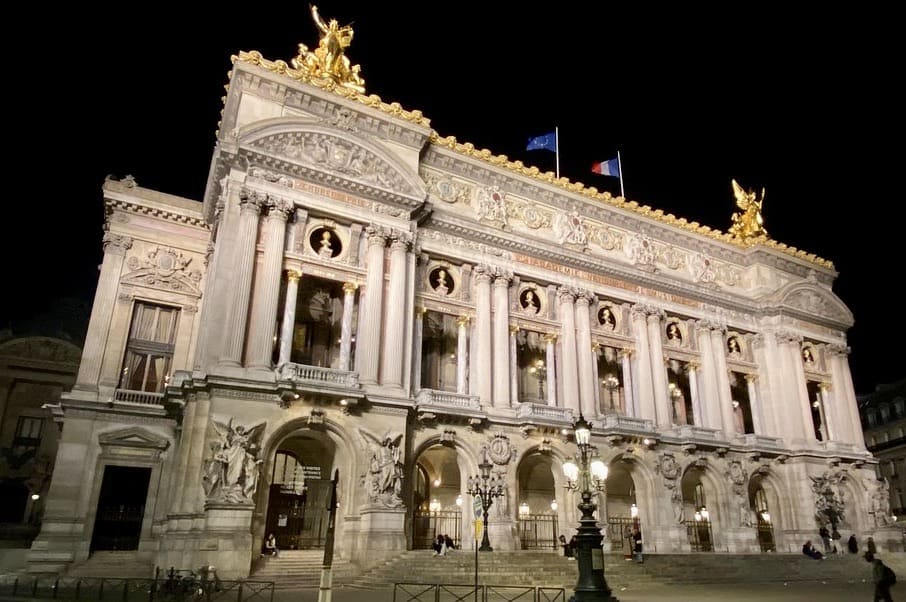
A dazzling symbol of 19th-century Paris, the Palais Garnier is one of the capital’s most prestigious monuments. Commissioned by Napoleon III and inaugurated in 1875, it was designed by architect Charles Garnier, who envisioned a palace dedicated to opera and ballet.
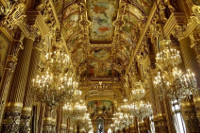
Its eclectic architecture, blending baroque and classical influences, impresses from the façade alone. Columns, statues, gilding, and marble combine in lavish harmony, announcing the grandeur within. Visitors are immediately struck by the famous grand marble staircase, a masterpiece of theatrical design, leading to richly decorated salons and radiant galleries.
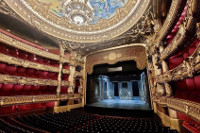
The auditorium, in red and gold, is crowned by a monumental seven-ton chandelier and a ceiling painted by Marc Chagall, added in the 20th century. This dialogue between classical heritage and modern creativity perfectly illustrates the vitality of the building.
Over time, the Opéra Garnier has inspired imagination worldwide: it notably gave rise to Gaston Leroux’s famous novel The Phantom of the Opera, forever linking legend to this iconic landmark.
Today, the Opera continues to host performances of opera and ballet, while offering tours that allow visitors to freely admire its architectural marvels. Both a monument of art and of history, it embodies Parisian refinement and France’s enduring passion for culture.
To discover the Palais Garnier is to step into a world of splendour and elegance, and to understand why, more than a century after its inauguration, it remains one of the shining jewels of the City of Light.